Ostrander & Sons
Crab Harbor, Sand Point and Netarts Flat. Third generation, working the north shore since 1974. Hand-picked on the ebb.
North shore · three bedsThe bay does most of the work. We just keep the trip to your plate short.
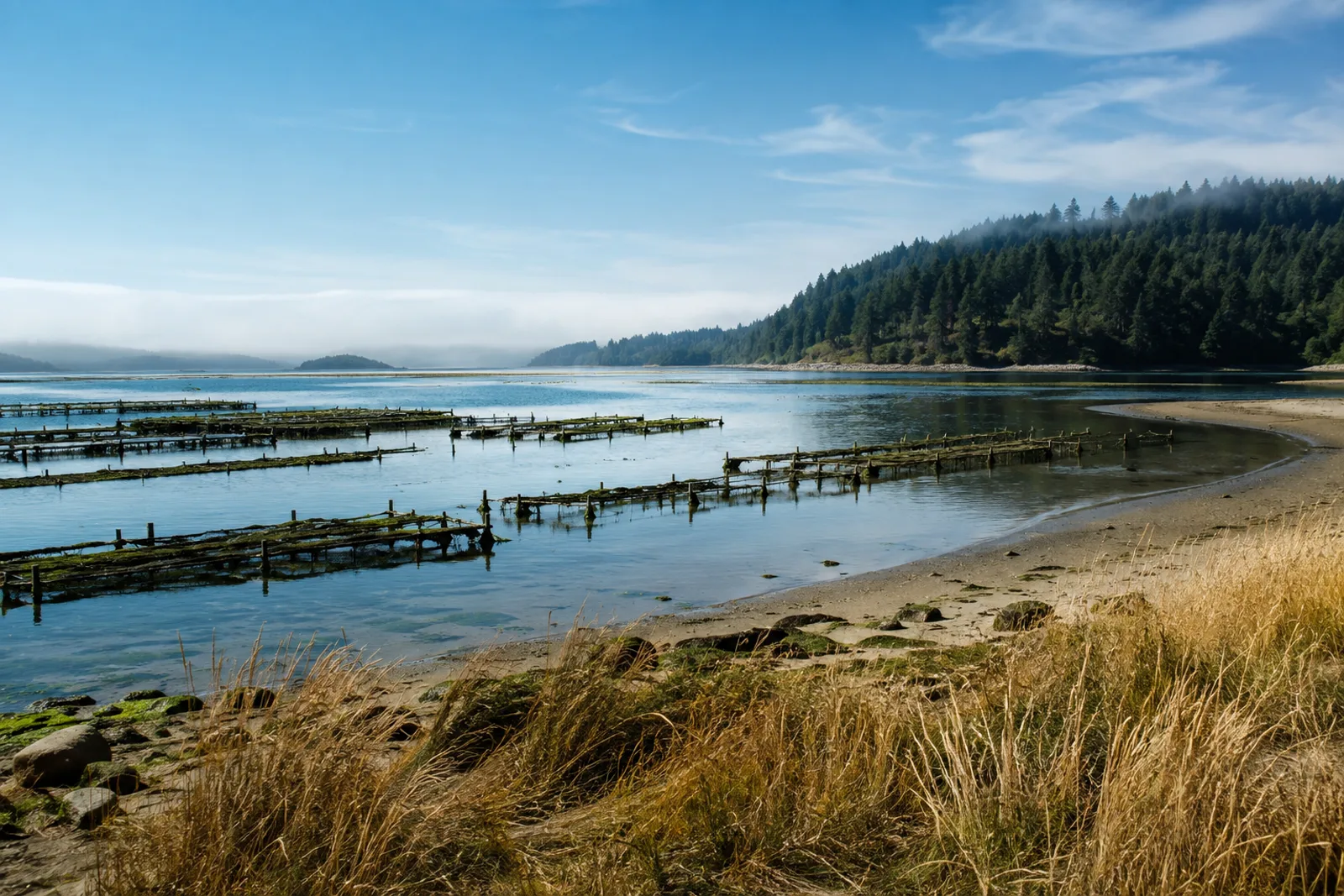
Netarts is small, cold and almost closed. Very little fresh water runs into it, so the water stays salty and steady.
In the Saltmarsh story, three years in that cold water gives an oyster its firmness and holds its liquor when opened. The shallow working ground dries at low water; everything is picked by hand.
Five beds, two grower families, and less than an hour from bed to bar. This is the fictional restaurant’s sourcing story, preserved from the original concept.
Crab Harbor, Sand Point and Netarts Flat. Third generation, working the north shore since 1974. Hand-picked on the ebb.
North shore · three bedsWhiskey Creek and Sunset Slough, at the brackish south end. A husband-and-wife operation with four employees and a hatchery.
South end · two bedsGrower names and histories are fictional concept content.
Agreed in January. When a storm takes a season, the room carries the cost. A steady relationship makes the rest possible.
A strained bed gets a season off, decided by the growers. A short ledger is sometimes the right ledger.
Cold, dormant, fat. The oysters stop growing and put everything into condition.
Water warms and growth restarts. Sweeter, more delicate oysters.
Spawning closes the warm beds. The colder beds carry the kitchen.
Recovery. The beds come back on within about three weeks of each other.
We close individual beds on spawning and rainfall, rather than following the old “months with an R” rule. Seasonal temperatures are illustrative concept data.
See the oyster board